 Official Government Website
What can we help you find?






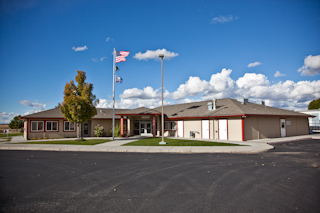
South Boise Women’s Correctional Center (SBWCC)
South Boise Women’s Correctional Center is a treatment and transition facility for retained jurisdiction (Rider) female residents. SBWCC has an operating capacity of 306 residents in two separate housing units. Programming opportunities are based on cognitive and behavioral change through intensive treatment, education and accountability.
Warden: Dagoberto Martinez
Visiting
NOTE : Idaho code 18-5210 states that a person commits a crime by knowingly introducing or possessing contraband in a correctional facility. Contraband includes, but is not limited to tobacco, cell phone(s) or telecommunication equipment, controlled/illegal substances, firearms or dangerous weapons, ammunition/explosives and escape tools or devices. Violations are punishable by imprisonment of up to 5 years and/or fine of up to $10,000.
Please read and be familiar with the Visiting Rules for Residents and Visitors and complete the visiting application process before visiting the facility.
Visiting schedules are subject to change based on emergency situations.
Case Management Services
Case management services are provided to all residents regardless of their status. Case managers work with each resident on a one-on-one basis to help address their individual needs. Case managers meet with residents upon their arrival and continue to meet on an as-needed basis until their release or as requested. Case management services vary depending on the needs of the resident but include: initial intake, face-to-face contacts, treatment plans, problem solving, parole plans, transitional funds, aftercare plans, financial planning, assistance with community resources, and classroom facilitation and program delivery.
Programming
Programs
Residents who are sentenced to a retained jurisdiction (Rider) are assessed to determine their medical, programmatic, education level and mental health needs. The information from these assessments is used to determine which treatment programs they will be participating in. The programs are as follows:
- Cognitive-Behavioral Interventions for Substance Abuse (CBI-SA): Developed by the University of Cincinnati Corrections Institute for the criminal justice population, this program is designed for individuals who are moderate to high need in the area of substance abuse. This program helps participants look at the impact drugs and alcohol have had on their lives and develop some tools to make different future choices. Participants meet in small groups (8-10 participants) over 44 sessions. This program places heavy emphasis on skill-building activities to assist with cognitive, social, emotional, and coping skills development. The program is divided into six modules including: Motivational Engagement, Cognitive Restructuring, Emotional Regulation, Social Skills, Problem Solving, and Success Planning. Participants will spend a significant amount of time in this group learning and practicing new methods of handling risky situations.
- Thinking for a Change (T4C) is an integrated cognitive-behavioral change curriculum developed by the National Institute of Corrections specifically for justice-involved individuals. T4C concentrates on changing the criminogenic thinking of individuals, and includes skill development and training in cognitive restructuring, social skills development, and development of problem-solving skills. T4C is comprised of 25 lessons delivered to small groups of participants (8-10) that build upon each other and can be used to craft an aftercare program to meet the ongoing individual needs of each participant following release back into the community.
- Advanced Practices (AP): Individuals sent on a retained jurisdiction who have already completed core IDOC programming (ART, CBI-SA, CBI-SO and/or T4C) will be placed in an Advanced Practices Group (AP). The Advanced Practice Curriculum provides a structured method to assist in practicing the skills learned in the core programming (ART, CBI-SA, CBI-SO and/or T4C) in a progressively more challenging way through the use of more difficult situations with increased pressure. These open-ended groups allow participants to continue practicing cognitive restructuring, emotion regulation, social skills, and problem-solving in increasingly complex and challenging scenarios. Once the learning objectives are achieved, inmates will be graduated from the group.
- Aggression Replacement Training (ART): The Aggression Replacement Training program, which is designed to be delivered over the course of 12 weeks, targets the cognitive, behavioral, and emotional components of aggression to reduce aggressive behavior. The program integrates Skill Development (a behavioral component) with Anger Control Training (emotional) and Moral Reasoning Training (values). Participants develop an understanding of aggression and its connection to criminal behavior and the “angry behavior cycle.” Through the integration of the three core components (skill streaming, anger control, and moral reasoning), inmates are taught an array of prosocial skills to develop better self-control and to learn to redirect and reduce their anger and aggression.
- Pre-release: This 40 to 60-hour program is designed to increase understanding of the rules and expectations of community supervision and restorative justice principles. Participants are required to complete a computer literacy course, a personal portfolio, and the Pre-release workbook, as well as attend several short, standardized group sessions related to education and career planning. The Pre-release curriculum includes information and training in the following categories: job search skills, money management, goal setting, education, employment, communication, housing, transportation, health, relationships, and supervision.
Alternative Treatment
In addition to programming, individuals are provided opportunities to engage in additional educational and/or treatment groups: Education, Building Healthy Relationships, Workforce Readiness, Seeking Safety, Mindfulness, Stress Management and Grief and Loss.
Education: Education programs are designed to prepare incarcerated individuals to live successful, crime-free lives. These educational services include Literacy, Secondary Education, Professional Technical Education and Special Education based on assessed individual student needs. Educational programs recognize participant’s achievements through certifications and diplomas that are also recognized by employers and other educational entities. Programs are based on the needs of the students (through assessments), the needs of employers and the ability of the institutions to provide the training. Educational case plans drive the educational programs that are offered to individuals.
Building Healthy Relationships: This domestic violence support group provides education to help recognize domestic violence risk factors and the harm caused for themselves and their children by remaining in abusive relationships. Women learn how to identify abuse, select healthy partners and how to nurture their children in a manner that could stop the cycle of abuse.
Workforce Readiness: These education classes enhance workforce development and life skills.
Beyond Trauma: Beyond Trauma addresses past abuse that women have experienced. Through the curriculum women address the responses/reactions that they have experienced in regards to their trauma such as engaging in drug and alcohol use to manage emotions. The curriculum moves from an attempt to normalize the emotions and responses that women have experienced and then to develop strategies to manage anxiety and responses to triggers of past trauma.
Mindfulness: This is a 20-session group that combines cognitive and behavioral therapy. It is consists of four components: Basic Mindfulness Skills, Emotion Regulation, Interpersonal Effectiveness and Distress Tolerance.
Stress Management: Participants learn skills to help manage emotions, including anger. The group is designed for delivery in 12 sessions. Each group consists of a period of physical exercise, an educational process topic and relaxation techniques.
Grief and Loss: This is an eight session group which addresses issues associated with losses in our lives. Participants develop an understanding of how these issues relate to decisions we make such as using alcohol and other drugs.
Address:
13200 Pleasant Valley Road
Kuna, ID 83634 (opens Google Maps in a new tab)
Mailing Address:
PO Box 51
Boise, ID 83707
Phone: 208-334-2731
Email: swbcc@idoc.idaho.gov