Resident Communications Updates Frequently Asked Questions

What are we changing to?

IC Solutions has a new licensing contract with ViaPath Technologies to provide a free Bridge 8 tablet to every resident.

What is the big difference between the old tablets and the new tablets?
  • The old tablets are a hard drive and anything downloaded stays on them. The JPay tablets belong to the resident.
  • The new tablets use the cloud. Anything on your profile stays in the cloud, NOT on the tablet. These tablets belong to the facility, but your content stays in your cloud profile. If you move to another facility, you leave the tablet at your current facility and a different one will be issued at the new facility.
What about stamps and media funds that haven't been used yet?

Transfer only what you plan to use before May 2025.

Will there be any free stuff on the new tablet?

Yes! There will be things like FM Radio, some eBooks, Chess, Solitaire, and other applications.

Why can't you turn off the mortality switch on the tablet?

The mortality switch was only on the MP3 players which were sold to and used by residents prior to the JPay tablets. The tablets do not have a mortality switch.

What about all the things I have on my JPay tablet?
  • Per JPay, the content on your JPay tablet can be accessed for 30 days from the last sync to a kiosk.
  • We have reports that some JPay tablets are working beyond 30 days, however, IDOC cannot guarantee this functionality.
  • You will be allowed to keep the JPay tablet as long as it is functional and doesn’t become a security concern.
  • There is a process if you would like your tablet unlocked and sent to a residential address.  More to come on this process…
Is it worth it to buy a JPay tablet?

It is not recommended after Thursday, February 6th.  Please keep in mind the delivery of a newly purchased tablet takes approximately 45 business days, which would put delivery on April 7th or later.

What if I buy music, games, or other content for my JPay tablet after February 6th?

Please refer to the information above and know that you may only have access for 30 days from the last sync to a kiosk.  Purchase additional content at your own risk.

What will happen to the current kiosks?

After the deployment of the new tablets, the current kiosks will be removed from all IDOC facilities.  The new tablets communicate wirelessly with the network and kiosks are no longer needed.

 

Section area
Section Two Columns

Resident Communications Updates

The deployment of the new ViaPath tablets is complete for all Idaho facilities. 

IC Solutions has transitioned away from the JPay Electronic Communication Services (ECS) program for IDOC residents. Each resident has been provided a free Bridge 8™ tablet. Subscription-based entertainment is available to purchase through IC Solutions’ licensing contract with ViaPath Technologies. Each resident was provided a tablet charger and set of earbuds with a microphone at no cost. Replacement chargers and earbuds are available for purchase through commissary sales. See below for the weekly updates provided to the residents about the transition.

Please refer to Frequently Asked Questions for more information.

Section area
Section Two Columns

Daybell, Chad - IDOC #158991

Photo of Chad Daybell
Received
June 2024
Convicted of three counts of 1st degree murder for the killings of his first wife and two children of his second wife.

East Dorm

East Dorm is a 152-bed men’s housing unit at South Idaho Correctional Institution. The unit opened in June 2023. There are no other units like it in Idaho’s correctional system and few others like it in the country.

East Dorm was designed from the ground up to help its residents successfully return to their communities and live as law-abiding citizens. Many of its most important features are things that people on the outside of prison would consider to be normal. And that’s the whole idea – to teach residents how to live in a normal environment so they are prepared for reentry.

East Dorm has big windows, brightly painted walls, attractive flooring, and comfortable sofas. It feels more like a college dorm than a prison made of concrete and steel, the kind of place that hardens people and encourages criminal behavior.

East Dorm is designed to give residents opportunities to develop good habits and learn how to make good decisions. In the dorm’s kitchens, residents plan and prepare their own meals, and clean up after themselves when they’re finished. In the dorm’s laundry rooms, residents wash their own clothes and bedding.

Some residents already know how to do these chores, and their time in East Dorm helps them develop good habits. But many residents are unfamiliar with basic living skills and the lessons they learn are vital to their successful reentry.

East Dorm is also designed to put correctional staff in closer proximity to residents so staff can notice small changes in the residents’ moods and behavior. Instead of focusing solely on enforcing compliance with institutional rules, staff are expected to teach residents how to manage the kinds of daily stress that can trigger substance abuse and criminal behavior.

Now that East Dorm is up and running after years of planning, IDOC will monitor the people who live and work there to determine if the dorm’s innovative design improves their wellbeing.

Section area
Section image
East Dorm at South Idaho Correctional Institution
Section Two Columns
More content

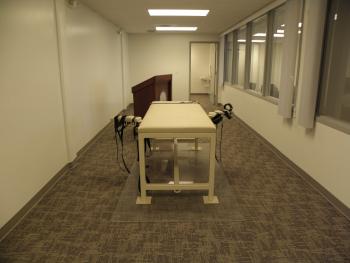
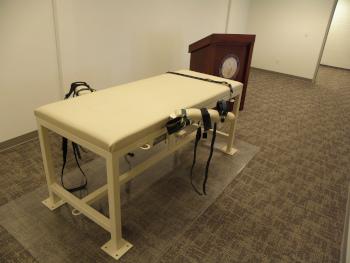
Execution Chamber

Image
Chamber looking south
Image
Chamber Looking Southeast
Image
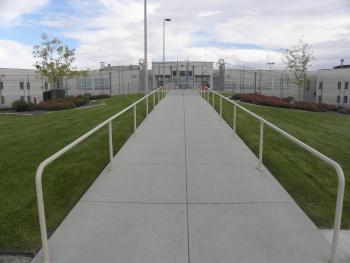
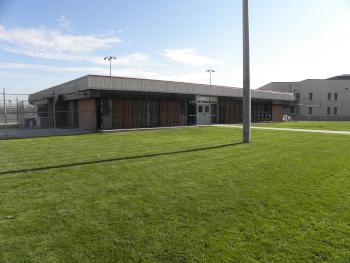
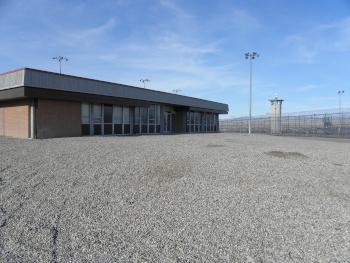
Exterior of IMSI
Exterior of IMSI
Image
F Block Front
F Block Front
Image
F Block Back
F Block Back
Image
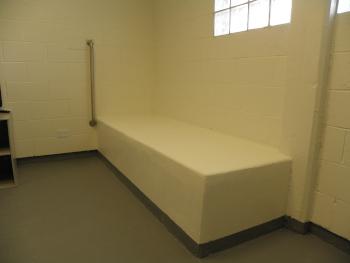
Isolation Cell Bed
Isolation Cell Bed
Image
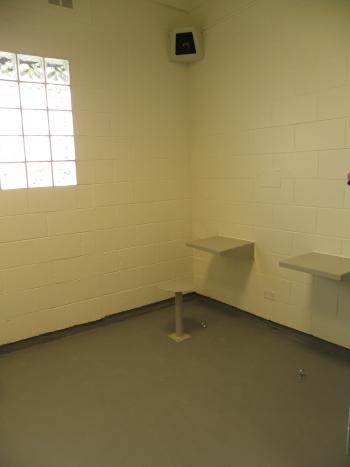
Isolation Cell Table and Window
Image
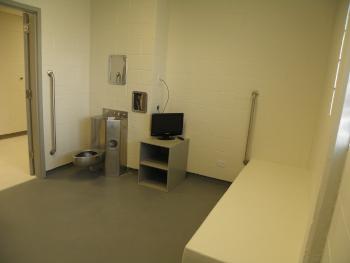
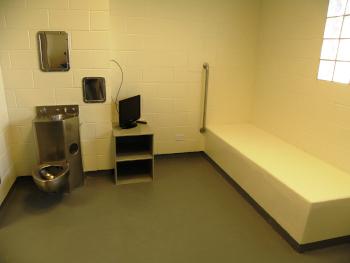
Isolation Cell with Sink-TV-Toilet-Bed
Image
Isolation Cell
Isolation Cell
Image
Table with Podium
Table with Podium
Image
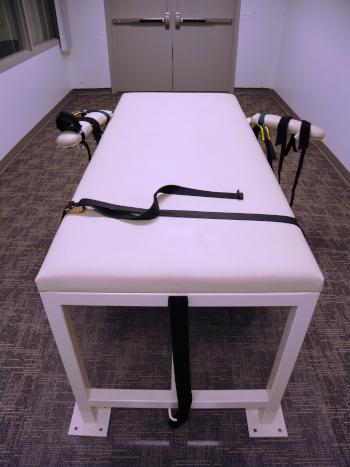
Table
Table
Image
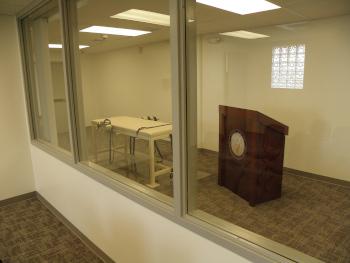
View from Witness Area
Image
Witness Area from Chamber
Image
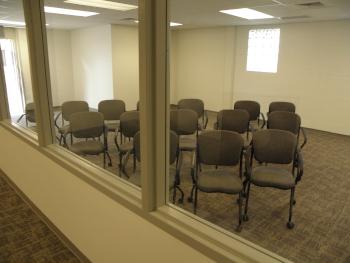
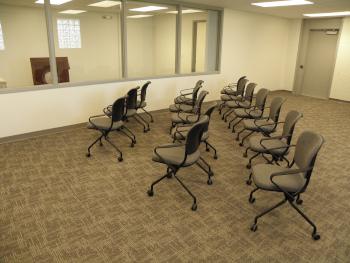
Witness Seating
Witness Seating
Image
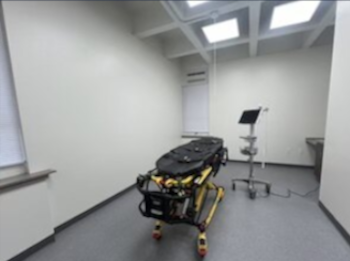
Execution Preparation Room
Section area
Section Two Columns

The resident/client search is temporarily unavailable at this time.  We apologize for the inconvenience.

Sex Offender Treatment Services

For male residents (CBISO)

IDOC provides its residents access to programming for a successful transition into the community. Treatment for residents uses risk-based assessments and follows research-based guidelines developed by the University of Cincinnati Cognitive Behavioral Interventions model that teaches strategies for avoiding sexual reoffending and related behaviors. There is a heavy emphasis on skill building activities to assist with emotional, social, cognitive, and coping skill development.

For female residents (Choices)

Treatment for female residents follows a cognitive behavioral treatment meant to educate about sexual offending and the emotional and physical processes that lead to abusive behavior. Female residents are also taught coping responses and skills to positively control their lives by making healthy, informed choices. Sex offender treatment services for female residents are approximately six months.

Presently, this programming is provided for residents at most of the male inmate facilities. Programming for female residents is provided at the Pocatello Women's Correctional Center (PWCC).

Section area
Section Two Columns

FAQ

How many juveniles are in your system?

The number of juveniles (under age 18) varies, but typically makes up a very small percentage of the overall population.

Why don’t you put prison residents to work?

Our residents do work. Residents provide janitorial services and a majority of the maintenance work at the prisons and community reentry centers. Correctional Industries keeps more than 400 residents busy at the Idaho State Correctional Institution, the Pocatello Women’s Correctional Center, and the Idaho Correctional Institution – Orofino. Correctional Industries participants work in trades such as furniture-making, upholstery, printing, sign shop, and metal shop. Every year, resident work crews assist the Idaho Transportation Department on road projects and the U.S. Forest Service on firefighting and forest rehabilitation. Residents are also active in numerous community projects throughout the year.

The department also manages our community reentry centers. A community reentry center allows residents to work while becoming reunited with families and the communities. The centers also provide protection to the community through high accountability and security.

How can I visit a resident?

The Department of Correction realizes the importance of support from the families and friends of residents. Visitation is allowed at every one of the IDOC's nine prisons and five community reentry centers. If you are interested in visiting a resident, you must complete a visitation application. Residents and proposed visitors can expect a six (6) week minimum processing time for visitation applications. The visiting room officer's supervisor will approve or deny the visitation application based on the review of the application, background check, and departmental policy.

Each institution sets its own visitation schedule. Residents can pass this information on to approved or potential visitors.

What types of crimes are residents serving time for?

Information on crimes is available on our website.

I keep getting unwanted telephone calls and letters from a prison resident. How can I stop it?

It’s easy to stop unwanted telephone calls. Since all resident telephone calls are collect, you can just refuse to accept the charges. You also can call the institution where the resident is incarcerated, tell them what the problem is, and they can put a block on your telephone that prohibits the resident from calling. To stop a resident from corresponding with you, contact the warden’s office at the facility and asked that they be stopped. A resident who continues to write after being asked to stop will be disciplined.

Do you maintain a list of convicted sexual offenders who are out in the community?

No, we do not. State law requires IDOC to provide sex offenders written notification of their duty to register prior to their release from confinement. Sex offenders must register with the sheriff's office in the county in which they reside. The Idaho State Police maintains the master list of registered sex offenders living in Idaho. More information is available on the Idaho State Police website including photos of offenders classified as Violent Sexual Predators.

What can I do to help my family member prepare for his/her parole hearing?

The Idaho Commission of Pardons and Parole operates independently from IDOC. All questions about parole matters should be directed to the commission. You can learn more about the process by visiting the Commission of Pardons and Parole.

The commission considers many factors when deciding if a prison resident will be released into the community. They include but are not limited to the resident's behavior while in prison, psychological evaluations, and educational accomplishments.

What is being done to prevent violence on IDOC employees by prison residents and resident-on-resident violence?

Security is the top priority in everything the department does, and Idaho’s institutions are considered to be among the safest in the United States. When an individual enters the system, they are classified at a reception and diagnostic unit. Those who are considered to pose a risk to other prison residents are assigned living arrangements that provide higher security.

Likewise, residents who are thought to be especially vulnerable are given housing assignments where security staff can provide a higher degree of protection. Security staff periodically interview vulnerable residents in a private setting to assure they feel safe. Residents who assault staff or other residents are immediately segregated and face disciplinary measures. They include loss of privileges and the possibility of new criminal charges.

What can my incarcerated family member do to report and stop violence in IDOC facilities?

The department takes all forms of assault seriously. If a prison resident has been assaulted or feels they are in danger, they should immediately contact a correctional officer or sergeant. They will take steps to report and investigate the resident's concerns and move them to a safe place at the institution. If the resident doesn’t feel comfortable talking with an officer, they can ask to talk with an investigator or shift commander. 

What can my incarcerated family member do to file a grievance at an IDOC facility?

The department has a formal grievance process that enables all prison residents, without the threat of reprisal, to resolve problems. The process is explained when residents begin their incarceration. A grievance must be submitted within 30 days of the incident about which the resident is complaining. The grievance should be specific and include facts like dates, places, people involved, a description of how the resident was affected, informal action taken to resolve the complaint, and the names of employees from whom the resident has already sought help regarding the grievance.

What can my incarcerated family member do to receive medical care and what services are offered?

The department provides medical, dental, psychiatric and psychological services and treatment to prison residents. Emergency care is available 24 hours a day. Correctional officers undergo a yearly training program and are expected to respond to health emergencies within four minutes. Residents who have illnesses or injuries that cannot be adequately treated at the institution where they are incarcerated are transported to hospitals and clinics.

Why are prison residents transferred between IDOC facilities?

Transfers occur to maximize security and capacity at IDOC facilities and to prepare residents for re-entry into society. Residents are also moved to lower security facilities when their classification is lowered.

Is IDOC aware of gang activity in its facilities?

Yes. Each institution has one officer assigned to collect and record intelligence on gang members. The information is then analyzed by IDOC’s gang unit. In addition, the department disperses criminal gang members and frequently changes security practices to ensure safety.

The department considers gangs to be a threat to security and seeks to discourage gang activity whenever possible.

How are residents classified?

All residents committed to the custody of the department are sent to the Reception and Diagnostic Unit (RDU) for evaluation and classification. During the RDU process (usually lasting two weeks), the resident receives a physical examination, psychological evaluation, educational assessment, and a substance abuse evaluation. Information received during the reception and diagnostic process is reviewed by a classification committee and entered on a classification sheet.

The three resident classifications are close (those serving long-term sentences, have an escape history, or a disciplinary problem), medium (those who have demonstrated an ability to follow instructional rules and regulations, may have a considerable amount of prison time left to serve, and who may be an escape risk at a lower custody level), minimum (those who have continually demonstrated the ability to follow instructions and who don’t represent an escape risk).

Who can I contact with questions about my family member’s incarceration?

Most questions can be answered by calling the institution where your family member is incarcerated. This should be your first stop for answers. If you have a question or concern that cannot be answered directly by the officer on duty, you may be referred to the warden’s office. You can also contact the Office of Constituent Services at Central Office with questions.

How many individuals can be incarcerated in IDOC's correctional facilities?

IDOC's nine state-owned prisons and five reentry centers house a total of 8,000 incarcerated individuals. Some are also held in county jails and when necessary, out-of-state contract facilities.

How much does it cost per day to house a prison resident or supervise a probationer or parolee in the community?

The average cost per day to house a prison resident in Idaho prisons was $99.66 for fiscal year 2025. The average resident cost per day at the community reentry centers was $75.30 for fiscal year 2025. CRC residents pay 35% of their wages to help defray those costs. Their wages paid (an estimated) $22.32 of the CRC cost per day for fiscal year 2025. The average cost per day for someone on probation or parole was $8.72 in fiscal year 2025.

Section area
Section Two Columns
More content

Minimum Custody

Minimum custody residents may be assigned to a facility with a non-secure perimeter. Residents must report for counts, except when on work assignments or on work release. Movement of minimum-security residents within the facility may be unrestricted.

At a work camp and offsite vocational work projects when residents are outside the assigned perimeter, they may be unescorted; however, staff or a designated person will make visual observation of them at least every two hours. Facility heads may approve exceptions to the two-hour observation requirement for specific jobs or programs.

At facilities with work release programs residents must report for counts, except for when away from the facility on an approved release. Movement within the facility may be unrestricted. When outside the assigned perimeter, the resident may be unescorted and will be required to report to the facility as directed by staff.

Minimum custody is designed to house inmates who typically have the following:

  • No recent class A or B disciplinary offense reports
  • Nonviolent and/or low-risk crime
  • High-risk crime but nearing a release date and no classification points for disciplinary offense reports
  • Do not present an obvious escape risk and
  • Do not present an obvious threat to public safety
Section area
Section Two Columns