Attorney Access

The Division of Prisons recognizes the importance of residents being able to meet with their attorneys.

  • Attorneys, attorney's agents, and court appointed professional experts can access the department's standard operating procedure, rules, and application at the following links:
  • Attorney and attorney agent must schedule with the facility at least 24 hours in advance. Normal access times are between 8 a.m. and 4 p.m., Monday through Friday.
  • Residents may take legal work to a meeting with his/her attorney, but is not allowed to return to their housing unit to obtain additional materials. These materials are subject to search for contraband.
  • Attorneys are not required to complete an application, but are verified typically by presenting their Idaho Bar Association card at the facility or may be verified using Tucker’s Legal Directory, or by contacting the Idaho Bar Association.
  • Attorneys and attorney's agents must follow the dress code described in Rules for Meeting with Residents.
  • Meeting with groups of residents is only permitted after a Deputy Attorney General assigned to the Department has verified class certification or co-parties.
  • Attorney and attorney agent meetings will be conducted in accordance with the custody level of the facility. Non-contact meeting areas might be used when staffing prevents direct contact during the meetings.
  • There will be no exchange of items between the attorney and resident without the specific authorization of the facility head or designee.
  • If so ordered by a court with jurisdiction, professional experts may have contact with residents. Court-ordered professional experts can bring testing equipment and supplies that are specifically listed in the court order. At least 48 hours before the testing, the expert must submit by email or facsimile, a list of the equipment, a description of how the resident will be in contact with the equipment, the purpose of the equipment, and an estimate of the time needed for the procedure. All testing equipment and supplies will be searched upon entering and exiting the facility. The expert must briefly turn on and demonstrate all electronic equipment. If the resident is housed in administrative segregation and removal of restraints is necessary for the testing, the expert must sign a waiver of liability before staff will remove the restraints.

Attorneys who are not an attorney of record for a resident may meet with the resident up to three times.

Section area
Section Two Columns
More content

Mental Health

Correctional Mental Health Services

Mission

Mental health staff must provide timely, mental health services that optimize the level of individual functioning of mentally ill IDOC residents and those vulnerable to mental health disorders in the least restrictive environment.

Vision

Our vision is to provide the highest standard of care as outlined by the National Commission on Correctional Health Care (NCCHC), Federal and State statutes, and Constitutional mandates. Our goals focus on:

  • Maximizing the functional level of mentally ill residents
  • Teaching the skill sets of independent functioning, self-control and reintegration
  • Fostering the skills and abilities required to function within the correctional environment and eventual reentry to the community


Values

  • Competence
  • Integrity
  • Dignity
  • Justice
  • Fidelity
  • Nonmaleficence


Correctional Mental Health Care Services (CMHS) provide identification and services to all residents with mental health needs. All IDOC residents have the right to, and the right to refuse mental health care. All mental health care provided is free of charge.

Mental health services in the prisons are comparable to services offered in the community. CMHS is designed as a continuum of care from initial incarceration to release back into the community. Services range from lower level support to secure living units specifically designed to treat and meet the needs of the seriously mentally ill. All treatment practices are based on sound current clinical research and provided by qualified mental health professionals with current licensing through the Idaho Bureau of Occupational Licenses.

All IDOC prisons are accredited through the National Commission on Correctional Health Care (NCCHC). All prisons are periodically audited independently by NCCHC to ensure the highest standard of care are met for ongoing accreditation.

Helpful and Informative Websites

Image Caption
Many hands
Section area
Section image
Many hands
Many hands
Section Two Columns
More content

Substance Abuse Services

The Idaho Department of Correction offers a variety of programs which address substance abuse issues. Chemical dependency continues to be one of the main issues of the incarcerated, with approximately 85% of the residents having substance abuse problems. To address these problems, the department offers specific programming to address the substance abuse problems.

These are some of the substance abuse programs that are available to IDOC clients:

  • University of Cincinnati Behavioral Interventions-Substance Abuse (CBI-SA)
  • University of Cincinnati Behavioral Interventions-Advanced Practice (CBI-AP)


Image Caption
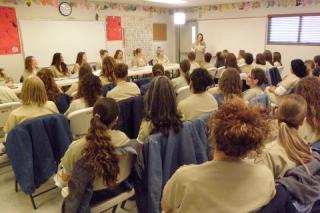
Female TC Group
Section area
Section image
Female TC Group
Female TC Group
Section Two Columns

Treatment

The Idaho Department of Correction provides evidence-based treatment to its residents. The ultimate goal is to reduce recidivism as residents are released to communities.

All residents are assessed to determine their medical condition, programmatic needs, education level and mental health. The information from these assessments is used to format a rehabilitation program to address each individual's identified risk and needs.

Programs and services address the following areas:

  • Cognitive/behavioral
  • Mental health
  • Substance abuse
  • Education and vocational education
  • Aftercare
  • Sex offender programming


The basis of quality treatment and education is twofold: Good assessments and good case plans. Case plans prioritize resident's needs and create a plan for accountability that can lead to successful reintegration into our communities.

Image Caption
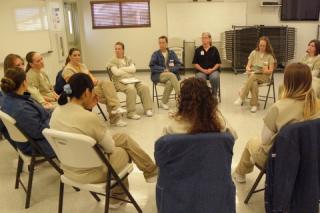
Classroom at SBWCC
Section area
Section image
Classroom at SBWCC
Classroom at SBWCC
Section Two Columns
More content

Juvenile Education

Special Education

The Individuals with Disabilities Education Act (IDEA) requires the department to provide a free and appropriate public education in the least restrictive environment. Eligibility criteria to receive Special Education services are students under twenty-two (22) years of age who have a previous special education history, have yet to obtain a high school diploma, continue to need special education and related services to benefit from participation in an educational assignment, consent to receive special education services, and have a current transition plan/individualized education plan.

Title One

Includes students under the age of 22 and enrolled in classes 15 hours a week. School programs are designed to provide services to meet the unique needs of youthful, at-risk residents.

Goals

  • Identify and implement evidence-based teaching strategies to enhance student learning
    • Strategy: Collect and review assessment data, and revise curriculum and instruction accordingly
  • High school credit is granted for non-traditional learning experiences based on graduation standards
    • Strategy: Collaborate with facility and community providers to identify learning experiences that lead to high school credit.
    • Strategy: Align these credits with graduation standards and incorporate into graduation plans
  • Blended learning techniques will be leveraged to optimize efficiency, and to tailor and expand teaching methodology to best meet student learning style needs
    • Strategy: Provide staff development for the implementation of educational software
    • Strategy: Embed educational software lessons and objectives into curriculum and personal education plans.
Image Caption
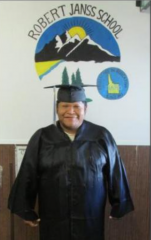
RJS Graduate
Section area
Section image
RJS Graduate
RJS Graduate
Section Two Columns

Post-Secondary Education

Career Technical Education

Goals: Provide training programs taught by certified correctional education staff resulting in industry certification, or contracted college/university staff with post-secondary competency certificates. Curricula is approved by the Idaho State Department of Education or in accordance with industry standards that provide residents with the essential knowledge, skills and abilities needed to secure employment in occupations identified by the US Department of Labor and/or the Idaho Workforce Development Council to be in demand in the State of Idaho.

  • Deliver Pre-Release Computer Literacy, and Education/Career Planning to all students.
    • Strategy: Assess students to determine career readiness and soft skill needs.
    • Strategy: Prepare incarcerated individuals for successful reentry based on individualized interests and post release plans.
  • Increase the number of post-secondary opportunities.
    • Strategy: Expand partnerships with institutions of higher learning.
    • Strategy: Utilize advisory committees to assist in the development and enhancement of short-term training programs.
    • Strategy: Identify industry/community partners.
  • Ensure appropriate education/career program placement for eligible incarcerated individual.
    • Strategy: Students transferred to the appropriate facility based on identified career interest
  • Robert Janss School is hopeful to obtain the Pell grant towards offering college courses to residents. However, this is currently in the works and is not official. The Pell grant goes live in 2023. The courses and certifications list will most likely change - down the road

      Courses and Certifications Offered at Correctional Facilities in Idaho

      1. Undergraduate Coursework
        • Skill Stack Badge Program
          • Dairy Science
          • Administrative Services
          • Ornamental Horticulture
          • Welding
      2. National Center for Construction Education & Research (NCCER) Certification:
        • Core
        • Carpentry
        • Masonry
        • Electrical Wiring
        • Cabinet Making
        • Drywall
        • Electronic Systems Technician
      3. Microsoft Office Specialist (MOS)
        • Access
        • Excel
        • Excel Expert
        • Outlook
        • Power Point
        • Word
        • Word Expert
      4. Registered Apprenticeships
        • Drywall Applicator
        • Residential Electrician
        • Residential Carpenter
        • Bricklayer
      Section area
      Section Two Columns

      Literacy

      Adult Basic Education

      Foundational Learning

      Target: Students assessed below the 6th grade level in reading or math

      All residents will demonstrate completion of the Education/Career Bridge One series in language arts, math, science and social studies. Priority is given to residents 21 and younger.

      Developmental Education

      Target: Students assessed at the 6th grade level in reading or math, with secondary education goal

      All residents will demonstrate completion of the Education/Career Bridge Two series in language arts, math, science and social studies. Priority is given to residents 21 and younger.

      Goals: Provide higher level instruction integrated with technology and financial literacy leading to secondary education completion:

      • ABE curriculum is reviewed and revised based on student data and current ABE and correctional education best practice.
        • Strategy: Align curriculum with Common Core State Standards
        • Strategy: Provide training for staff on implementation of the revised curriculum
      • Blended learning techniques will be leveraged to optimize efficiency, and to tailor and expand teaching methodology to best meet the students learning style.
        • Strategy: Provide staff development for the implementation of educational software
        • Strategy: Embed educational software lessons and objectives into curriculum and personal education plans.
      • Pre-release, Computer Literacy and Education/Career Planning will be embedded into every level of the ABE program. Students will leave the IDOC prepared for post-secondary education and the workplace.
        • Strategy: Implement and train staff on the Pre-release Program.
      • Students will acquire stackable credentials to increase their employability
        • Strategy: Partner with SDE, DOL, LCSC, CWI, CI and industry to expand training opportunities for resident students
      Section area
      Section Two Columns

      Education

      The Robert Janss School is a state-accredited Special Purpose school within Idaho prisons. The school offers basic education and general education diplomas.

      The curriculum offers training for IDOC residents as a stepping stone for successful transition to community post secondary programs, job training programs or self sustaining jobs upon their release. The emphasis is on helping residents attain real and rewarding jobs, relevant credentials and postsecondary education.

      The curriculum is comprised of four sections, called Education/Career Bridges. Education/Career Bridges One, Two and Three combine adult literacy, technology and workplace skills based on assessed resident needs. The goal of Education/Career Bridge Four is to link residents on probation and parole to community resources by providing transitional support with tutoring/career advisement and financial education.

      Image Caption
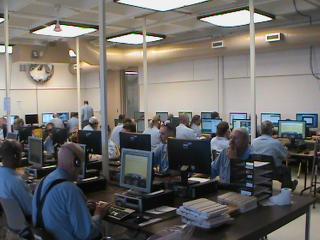
      Computer lab
      Section area
      Section image
      Computer lab
      Computer lab
      Section Two Columns

      Literacy
      Deliver targeted, data-driven instruction designed to maximize academic achievement and prepare students for post-secondary education and the workplace

      Post-Secondary
      Prepare students for successful reentry into the workplace and community through PreRelease preparation, current vocational skills training and post-secondary academic coursework.

      Juvenile Education
      Maintain high quality educational programs that align with Common Core State Standards for residents below the age of 22 years and promote lifelong learning.

      Vocational Educational Opportunities - technical education programs of the Robert Janss School, Idaho Department of Correction, are intended to provide residents with the skills needed to obtain employment.

      Across the state on any given day, over 900 residents are enrolled in classes delivered by the Robert Janss School within IDOC facilities.


      “None of us got where we are solely by pulling ourselves up by our bootstraps.  We got here because somebody - a parent, a teacher, an Ivy League crony or a few nuns - bent down and helped us pick up our boots.”  ~Thurgood Marshall

      More content

      Treatment & Programs

      The Department provides evidence-based programs to address the behaviors that resulted in the IDOC resident's incarceration. The goal is to teach them how they can change their lives by changing their thinking.

      Every resident receives an extensive assessment through the Receiving and Diagnostics Unit (RDU) at either Idaho State Correctional Institution for men or Pocatello Women's Correctional Center for women. These assessments provide critical information that helps define the best program and treatment options available based on the individual circumstances of the resident.

      In June of 2023, IDOC opened an innovative housing unit at South Idaho Correctional Institution. East Dorm was designed from the ground up to help its residents develop good habits and learn how to make good decisions. There are no other units like it in Idaho’s correctional system and few others like it in the country.

      Section area
      Section Two Columns
      More content
      Release Pay Debit Cards

      Pre-loaded debit cards issued upon release - Release Pay debit cards

      As part of the overall solution to make it easier for prison residents and the friends and family who support them, IDOC is pleased to announce a new program to benefit individuals who are being released from custody.

      Access Corrections, through its subcontractor Rapid Financial Services, is offering and supporting these release debit cards. These pre-loaded debit cards, also known as Release Pay Cards, will be issued upon being released from custody instead of checks. In today's banking climate, most banks will charge a check cashing fee if the check holder does not have a bank account. Our new solution eliminates this potential cost.

      The Release Pay Cards are pre-loaded with the remaining funds from residents' prison accounts and are activated free of charge. The Release Pay Cards have a 5-year expiration date. If a card expires, contact customer service to request a new card at no cost. There are no maintenance or inactivity fees associated with your money being placed onto the debit card.

      The Release Pay Card program allows newly released individuals to have immediate access to their funds in real time, at ATMs, banks, and through retail locations who accept Mastercard point of sale (POS) transactions. The Release Pay Card program is designed to provide many user-friendly options to obtain your money. It's your money; you choose how best to access it. An additional option is calling customer service and requesting to close out your card account and be provided a paper check. All the above-mentioned options are free of charge. The Release Pay card is a member of the MoneyPass network of surcharge-free ATMs, so if you choose to access your money through an ATM it’s best to choose a MoneyPass ATM. (To locate nearest MoneyPassATM, go to moneypass.com)

      See information on how to use your debit card at ReleasePay.com. For more information, see the Release Pay debit card FAQ.

      Image Caption
      Release Pay Debit Card
      Section area
      Section image
      Release Pay Debit Card
      Release Pay Debit Card
      Section Two Columns
      More content