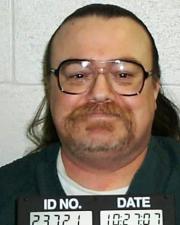
Pizzuto, Gerald - IDOC #23721

Pizzuto, Gerald IDOC #23721
Received
May 1986
Convicted of 1st degree murder for beating to death two people in Idaho County.

Hairston, James - IDOC #50337

Hairston, James - IDOC #50337
Received
November 1996
Convicted of 1st degree murder for two shooting deaths in Bannock County.

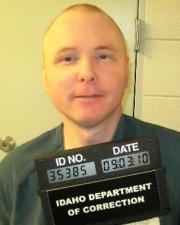
Dunlap, Timothy A. - IDOC #35385

Dunlap, Timothy A. - IDOC #35385
Received
April 1992
Convicted of 1st degree murder for killing a woman during a bank robbery in Caribou County.

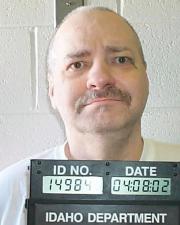
Creech, Thomas - IDOC #14984

Creech, Thomas - IDOC #14984
Received
January 1983
Beating death of an inmate in Ada County.

Death Row

We currently have eight residents under the sentence of death in Idaho.

The seven male residents are incarcerated at Idaho Maximum Security Institution south of Boise and the one female resident is incarcerated at Pocatello Women’s Correctional Center in Pocatello.

Three executions have occurred since Idaho enacted a new death penalty statute in 1977.

Section area
Section Two Columns

Parole Hearings

The Department of Correction prepares residents for parole by providing programs, but the decision to parole a resident is made by the Idaho Commission of Pardons and Parole. The Commission is a separate agency with a director and commission members appointed by the Governor.

The commission website includes hearing dates and information on preparing for a parole. Requests specific to the parole decisions should be directed to the commission.

When a resident receives parole they are placed under the jurisdiction of the IDOC Bureau of Probation and Parole for supervision. The Bureau of Probation and Parole has standards of supervision based upon the resident's risk.

Section area
Section Two Columns

Idaho law provides for sentences with a determinate and indeterminate length. Determinate means fixed. The parole commission cannot release a resident while they are on the fixed portion of their sentence. Indeterminate time can be served in prison or on parole.

Idaho law allows for pardons. While rarely used, Idaho pardons are administered through the Commission of Pardons and Parole.


Transport and Placement

The Transport and Placement department is responsible for the efficient movement of IDOC residents:

  • To maintain institutional populations at safe levels;
  • To provide treatment and education opportunities (Pathways - right bed at the right time); and,
  • To help residents prepare for successful reintegration back into the community.
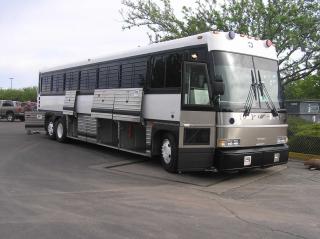
Image Caption
Bus for transporting residents
Section area
Section image
Bus for transporting residents
Section Two Columns

Contacts

Aaron Pryor
Inmate Placement Manager
apryor@idoc.idaho.gov

Elizabeth Gardner-Hale
Move Coordinator 
ehale@idoc.idaho.gov

Marissa Doan
Interstate Move Coordinator
mdoan@idoc.idaho.gov

More content

Residents at Work

The Idaho Department of Correction strives to keep residents busy in education, treatment or work. Residents in institutional jobs and on work crews are not employees and do not enjoy any of the benefits provided to employees in public jobs. Many residents lack job skills. Learning to work with others, follow instructions and put forth earnest effort are valuable skills that many residents need to be successful after their release. With the money earned, residents can send money home, pay restitution, child support and purchase items from the commissary. If the IDOC has a court order, for child support, restitution, etc., a percentage of the resident’s earnings is deducted automatically.

Institutional Work Detail: Many residents' first job is on institutional labor detail. The institutional labor detail (ILD) is a crew of residents whose primary job is to maintain large areas such as prison grounds and parking areas. ILD workers are normally not paid for their work, but good performance on ILD is often required before a resident will be considered for an institutional work assignment.

Institutional Workers: With the exception of security, IDOC utilizes residents to work in most areas of the correctional facilities’ operations. For example one staff member will supervise the food service operation, but all of the workers are residents. Skilled employees fill maintenance positions, but supervise a crew of resident workers who do much of the maintenance on facilities, vehicles and grounds. The Division of Prisons employs no janitorial staff; all of that work is done by residents.

Vocational Work Projects: Unlike ILD and institutional workers, vocational work crews leave the facility to work. Vocational work crews are comprised of minimum and community custody residents. ICIO, SICI, PWCC and SAWC operate vocational work projects. Vocational work projects are crews supervised by security staff. Vocational work projects such as forest fire and conservation crews provide much needed labor to state, city, county and federal government agencies. Working on a vocational work crew is an achievement for the resident. Not only is it the best paying job other than work release, it also provides a great sense of accomplishment. For example, IDOC fire fighting crews fight fires alongside civilian crews and are often ranked as some the best crews on any fire.

Correctional Industries: Correctional Industries teaches job-keeping skills to residents through meaningful work experience. This work experience reduces residents' idle time during incarceration while preparing them for a successful transition into society. CI's website ci.idaho.gov shows the many products they make. The Prison Industry Enhancement is a federal program that allows prison residents the opportunity to work for private industry in hard to fill positions. The program benefits the resident and the employer. These are real jobs in the community that provide residents valuable opportunities to learn marketable skills. The St. Anthony Work Camp operates a PIE program in conjunction with an employer in Rexburg.

Community Reentry Centers: When minimum and community custody residents near release, they may have the opportunity to be housed in a community reentry center (CRC) and obtain work in the community. Residents on work release are employed by businesses in the community. Many of these residents will be released to that community and will maintain the job they first obtained while still incarcerated. CRCs are located in Idaho Falls, Twin Falls, Pocatello, Boise (2), and Nampa.

Pay: The amount residents are paid and the source of the funds varies depending on the type of job.

  1. Prison Facilities: With the exception of ILD workers, resident workers may receive incentive pay. The money used for incentive pay normally comes from the resident management fund, which is generated by revenues from prison telephones, commissary, etc. Incentive pay runs from 10 cents an hour for low-skill jobs to 30 cents an hour for high-skill jobs. At work camps and CRCs, institutional workers receive slightly higher pay.
  2. Vocational Work Crews: Vocational work crews work under a contract with a hiring agency. Vocational work crews are self-sufficient, which means that the crew generates enough revenue to pay for the supervising staff, resident incentive pay and other costs associated with the operation of the crew such as tools, vehicles, etc.
  3. Work Release and PIE: Work release residents and PIE workers are employees of the business and are paid at least minimum wage. The employer sends the resident’s paycheck to IDOC. Residents on work release pay IDOC over a third of their pay. Residents on work release also pay fees to cover their transportation, laundry, etc. Residents working PIE are also employees, and paid at least minimum wage. Residents on PIE jobs pay over half of their gross pay back to the PIE program.

Image Caption
Work Crew
Section area
Section image
Work Crew
Work Crew
Section Two Columns

Food Services

Our Mission

The correctional specialist food service team of the Idaho Department of Correction is dedicated to providing nutritious and appealing meals to our residents. We adhere to the highest standards of food safety and institutional security. We focus our operations on transparency, efficiency, and consistency, while providing opportunities for change for our residents through the development of life skills.

Menus

In addition to the standard menu, residents can choose from various selective diets, including vegetarian menus and a "healthy choice" option, to meet individual dietary needs. Dietary requirements not able to be met with one of the selective diet options can be addressed through the medical provider. All menus are reviewed regularly by a registered dietitian to ensure that nutritional requirements are met.

Image Caption
Dinner prepared by residents at Treasure Valley Community Reentry Center
Section area
Section image
Dinner prepared by residents at Treasure Valley CRC
Section Two Columns

Contacts

Kendi Smith, Dietary Services Manager
kendsmit@idoc.idaho.gov

Casey MacArthur, Food Services Operations Manager
cmacarth@idoc.idaho.gov

Britany Kay, Food Services Operations Manager
bkay@idoc.idaho.gov

PREA

The Idaho Department of Correction has zero tolerance for sexual abuse and sexual harassment. The Prison Rape Elimination Act (PREA) of 2003 is a federal law that seeks to prevent sexual assaults and sexual misconduct in confinement settings. The department adopted a zero tolerance policy for sexual abuse in 2004. Preventing sexual abuse is a top priority for the agency.

All sexual abuse reports are investigated. Incidents involving potentially criminal acts are referred to law enforcement for investigation and potential prosecution.

Reporting Information

Residents are encouraged to report and have multiple ways to get help. The quickest way for a resident to receive help is to report to staff in the facility.  

Residents may report in the following ways inside facilities.

  • Tell any staff member.
  • Submit a written report, such as a concern form.
  • Call the PREA hotline and record a report.
  • Send a letter to the Idaho Sheriffs' Association. *Residents can send confidential mail and ask to remain anonymous for this option.

Family and friends may report in the following ways from the community.

These options are checked during normal business hours.

If an immediate response is needed, call the facility directly by clicking on the prison link and selecting the facility needed.

Concern forms and grievances may also be used for reporting. The PREA Policy has complete details.

PREA Employment Checks

Human Resource staff respond to all PREA hiring questions.

  • Send Email to hr@idoc.idaho.gov
  • Call the HR employment line (208) 658-2060 or contact central office and request HR at (208) 658-2000.

PREA Data and Reports

The agency publishes an Annual Report with sexual abuse data and actions take to improve program effectiveness. 

PREA Annual Report, 2023

PREA Annual Report, 2022

PREA Annual Report, 2021

PREA Annual Report, 2020

PREA Annual Report, 2019

PREA Annual Report, 2018

PREA Annual Report, 2017

Final PREA audit reports are published as they become available.

PWCC Audit Report, 2026

NCRC Audit Report, 2025

TVCRC Audit Report, 2025

IFCRC Audit Report, 2025

NICI Audit Report, 2025

ICIO Audit Report, 2025

ISCC Audit Report, 2024

IMSI Audit Report, 2024

EBCRC Audit Report, 2024

SBWCC Audit Report, 2024

SAWC Audit Report, 2024

TFCRC Audit Report, 2024

ISCI Audit Report, 2024

SICI Audit Report, 2023

PWCC Audit Report, 2023

TVCRC Audit Report, 2022

NCRC Audit Report, 2022

SBWCC Audit Report, 2022

EBCRC Audit Report, 2022

NICI Audit Report, 2022

ICIO Audit Report, 2022

IFCRC Audit Report, 2021

The Mountain View Transformation Center achieved compliance while named and managed as the Correctional Alternative Placement Program.

The PREA coordinator can be reached at 208-605-4772.

PREA is an essential part of the agency's efforts to keep prisons safe for residents and staff.

Image Caption
No Means No
Section area
Section image
No Means No
No Means No
Section Two Columns

What's New

  • Idaho Department of Correction's adult prisons and community confinement facilities have now all certified as PREA compliant. 
  • Six facilities exceeded the employee training standard.
  • In December 2024, the final two facilities achieved compliance with all standards.
  • The Mountain View Transformation Center certified as compliant while managed privately. The facility will have its first audit as a state facility in next audit cycle.

PREA Employment Checks

Human Resource staff respond to all PREA hiring questions.